
I. The guardian of the gates
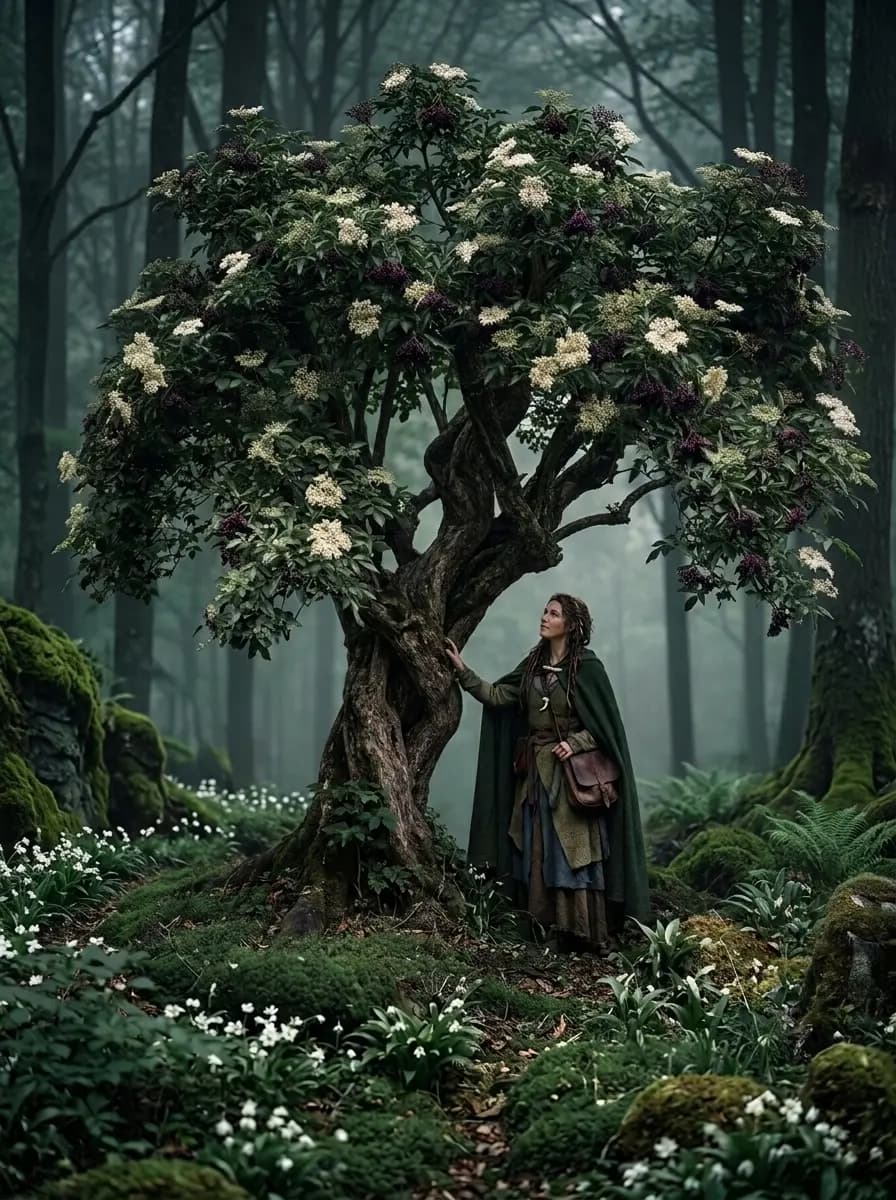
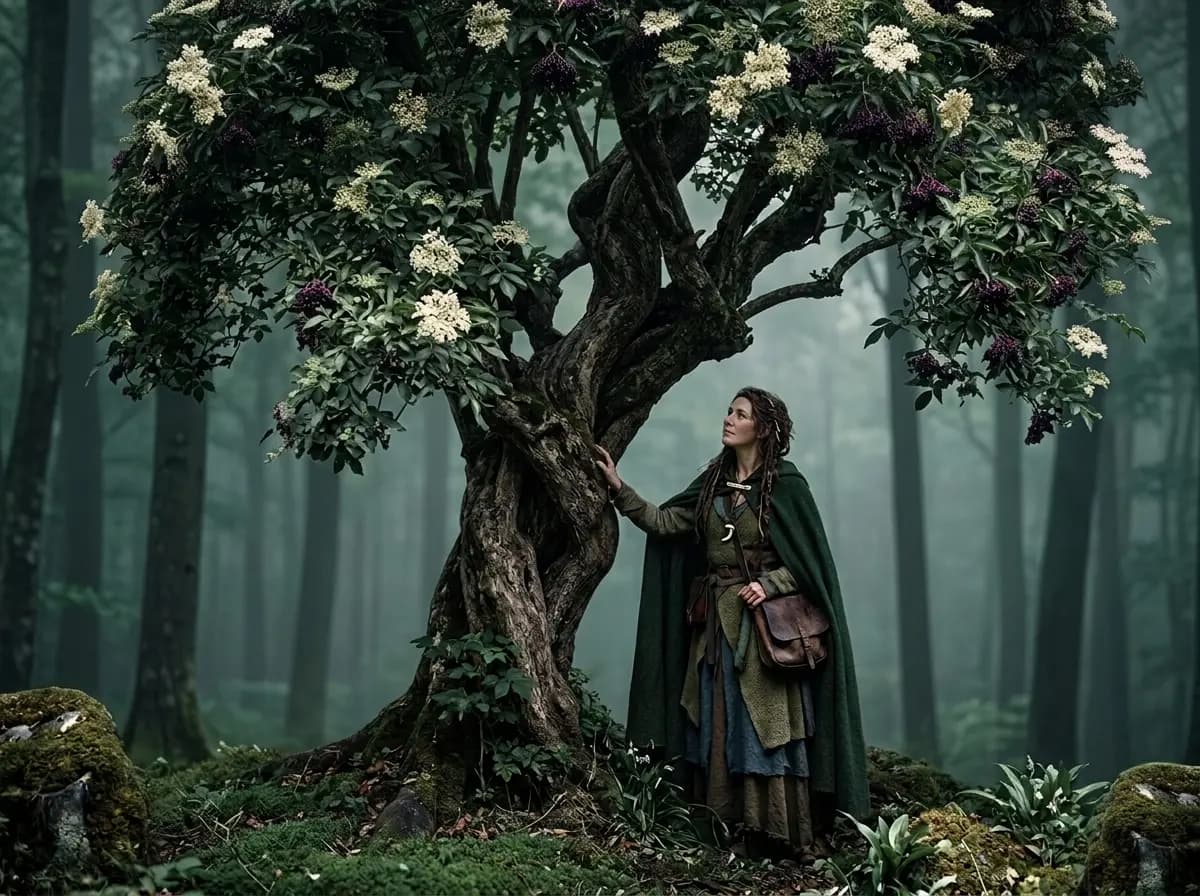
In the European countryside, an elder tree is never cut without first asking permission. Behind this custom stands an ancient figure: Lady Elder. According to English folklore, this old fairy dwells within the tree and watches over those who treat it with respect. To cut a branch without her consent was to risk her curse. But to offer a libation of milk at the foot of the trunk? That was said to bring protection from the evil eye and malicious spirits.
The Celts regarded the elder as a sacred tree, a symbol of transition between worlds. Its white flowers evoked purity, while its dark, almost black berries represented the secrets of the beyond. People often planted it near their homes, not only for its medicinal virtues but also because they believed it kept witches away. Yet, paradoxically, witches themselves used elder wood to make their magic wands. The tree embodied this fundamental duality of nature: healer and guardian of shadows, protector and gateway to the unseen.
Even today, this mystical aura persists. Who has never felt a strange fascination when encountering an elder in bloom at dusk, its white flower heads glowing like constellations fallen to earth?
II. Harvesting and preserving purple gold
The magic of elder does not live only in legends: it can also be found in your jars. Elderberries are generally harvested in late summer, when the clusters turn a deep purple, almost black. Be careful, however: raw elderberries are toxic. They must always be cooked before consumption. A golden rule that even Lady Elder would not have disputed.
For a foolproof elderberry syrup, here is the traditional method:
- Remove the berries from their stems with a fork.
- Rinse them gently, then simmer them with a little water until they release their juice.
- Press the pulp through cheesecloth to extract the liquid.
- Add sugar (about 700g for every litre of juice) and lemon juice.
- Bring to a boil, then pour into bottles.
This concentrated syrup keeps for several months in the refrigerator. A spoonful in a cup of hot water soothes the first chills, just as our grandmothers used to do. You can also make jellies, cocktail syrups, or even sorbets with it. The flowers, meanwhile, are wonderful in fritters or sparkling lemonade.

Vervain — A seasonal herbarium
Find ancestral recipes at just the right time.
Preparations, virtues, and stories: keep hundreds of plant profiles in your pocket.
III. The modern herbalist and the roots of the world
The elder reminds us of a forgotten truth: nature does not separate the sacred from the everyday. For our ancestors, treating a cold with elderberry syrup and invoking the protection of Lady Elder were part of the same gesture. Herbalism was not a cold science: it was a living conversation with the living world.
Today, we tend to place everything in separate compartments. The medicinal plant on one side, the fairy tale on the other. Yet it is precisely this union of the practical and the poetic that gives herbalism its strength. Learning a plant’s history, respecting its cycles, and understanding its virtues means rediscovering an authentic relationship with the plant world around us.
With its two faces — delicate flowers and dark berries, healer and guardian of thresholds — the elder perfectly embodies this philosophy. It invites us to look beyond appearances, dig beneath the surface, and recognize that every plant carries centuries of wisdom within it.
The next time you encounter an elder along a country path, stop for a moment. Observe its serrated leaves, breathe in its honeyed fragrance when the flowers are in season, or contemplate its dark clusters as autumn approaches. And remember: somewhere between science and legend, Lady Elder is still watching.
An article written with love for roots, berries, and the stories they carry.
Selected references
MDPI, Plants (2024).
From Supernatural to Ornamental: Black Elder (Sambucus nigra L., Family Adoxaceae) in Sweden
. An analysis of elder’s medicinal uses, historical pharmacopoeias, and folk-religious status in Scandinavia.
West Virginia University Extension Service.
Elderberry. A technical profile covering elder species, traditional virtues, preparations — including syrup, jelly, and wine — and harvesting precautions.
Gardenia.net (2025).
Sambucus nigra (Black Elderberry) — Benefits, Uses, Varieties, Care
. A botanical and practical reference on growing black elder, harvesting its clusters, and using the berries in the kitchen.
Note on oral folklore: the motifs of Lady Elder and other protective stories associated with trees belong to oral traditions recorded notably by nineteenth-century folklorists. For further reading: James George Frazer, The Golden Bough, and Alexander Carmichael, Carmina Gadelica.