
An Understated Calming Nervine
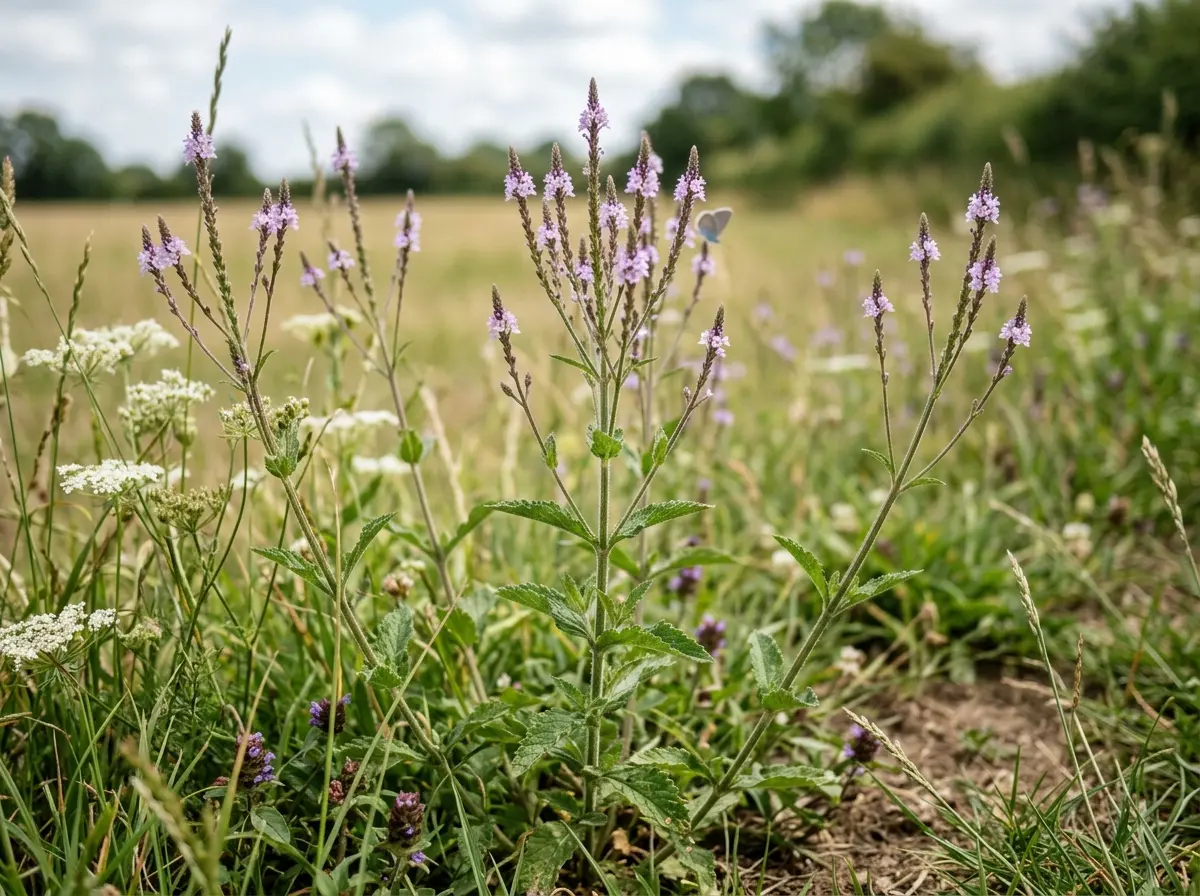
Common vervain stands out through its quiet action on states of nervous tension. Less dramatic than the great sleep herbs, it works in the background, like a hand resting on inner agitation. Once used for melancholy, persistent thoughts, and fragmented nights, it supports minds that struggle to come back down without forcing them.
Calming and Relaxing Properties
With calming and relaxing properties, common vervain supports the nervous system when it remains on alert. Its compounds, including certain iridoids, are studied for their influence on relaxation and sleep onset. It does not force sleep; rather, it helps the body leave tension behind and return to a quieter inner rhythm.
Long before chemistry and pharmacopoeias, vervain was already an emblem. Here is how a few civilizations lived with it.
History & Mythology
The Tears of Isis
Ancient Egypt
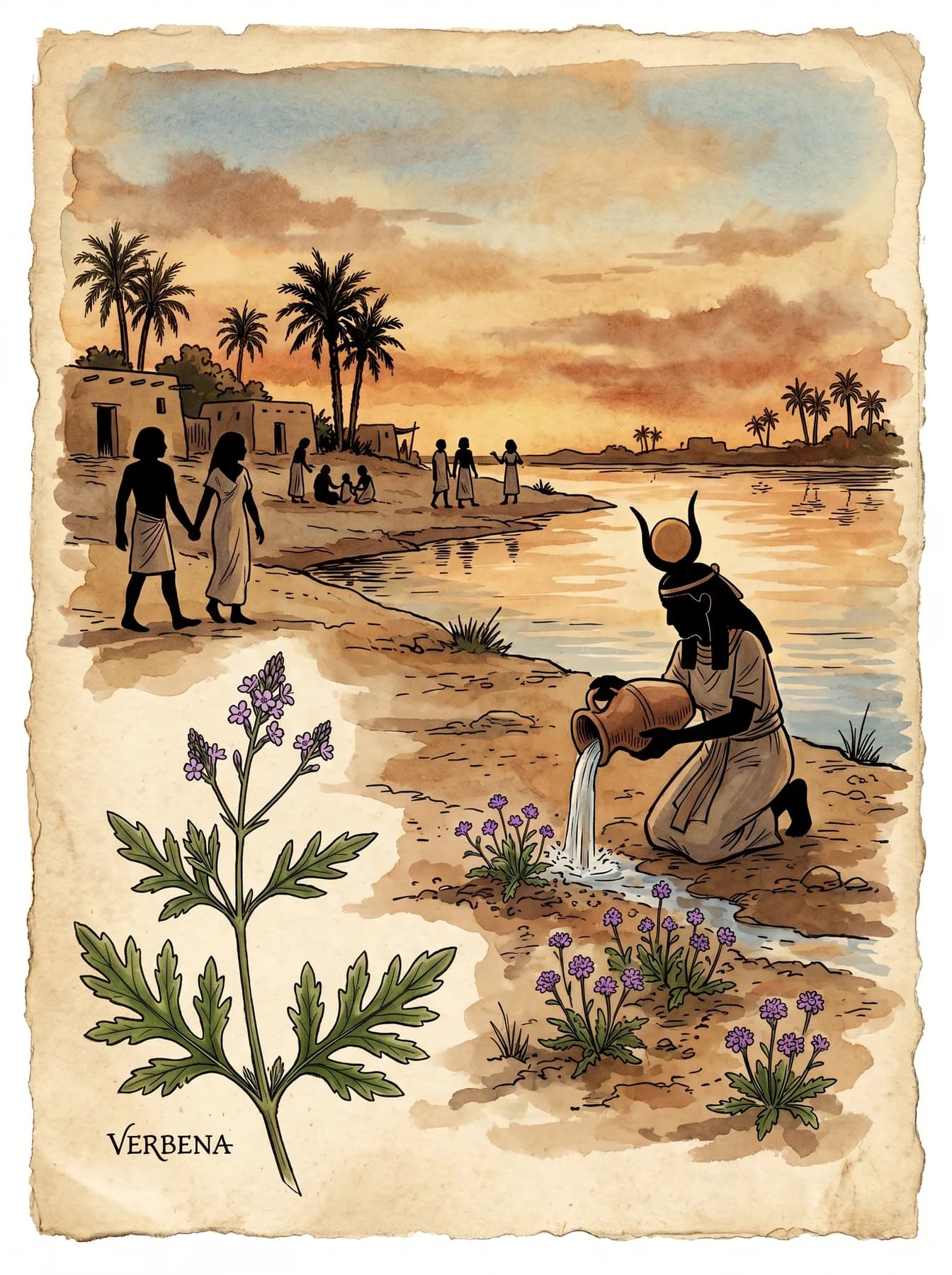
For the ancient Egyptians, vervain wasn't just a plant — it was a memory. According to myth, when the goddess Isis wept the death of her husband Osiris, her tears touched the earth — and from each drop sprang a slender stem with pale lilac flowers.
The priests kept dried bouquets in their temples, burning them as offerings or using them in rituals of bodily purification and fertility.
Herba sacra
Ancient Rome
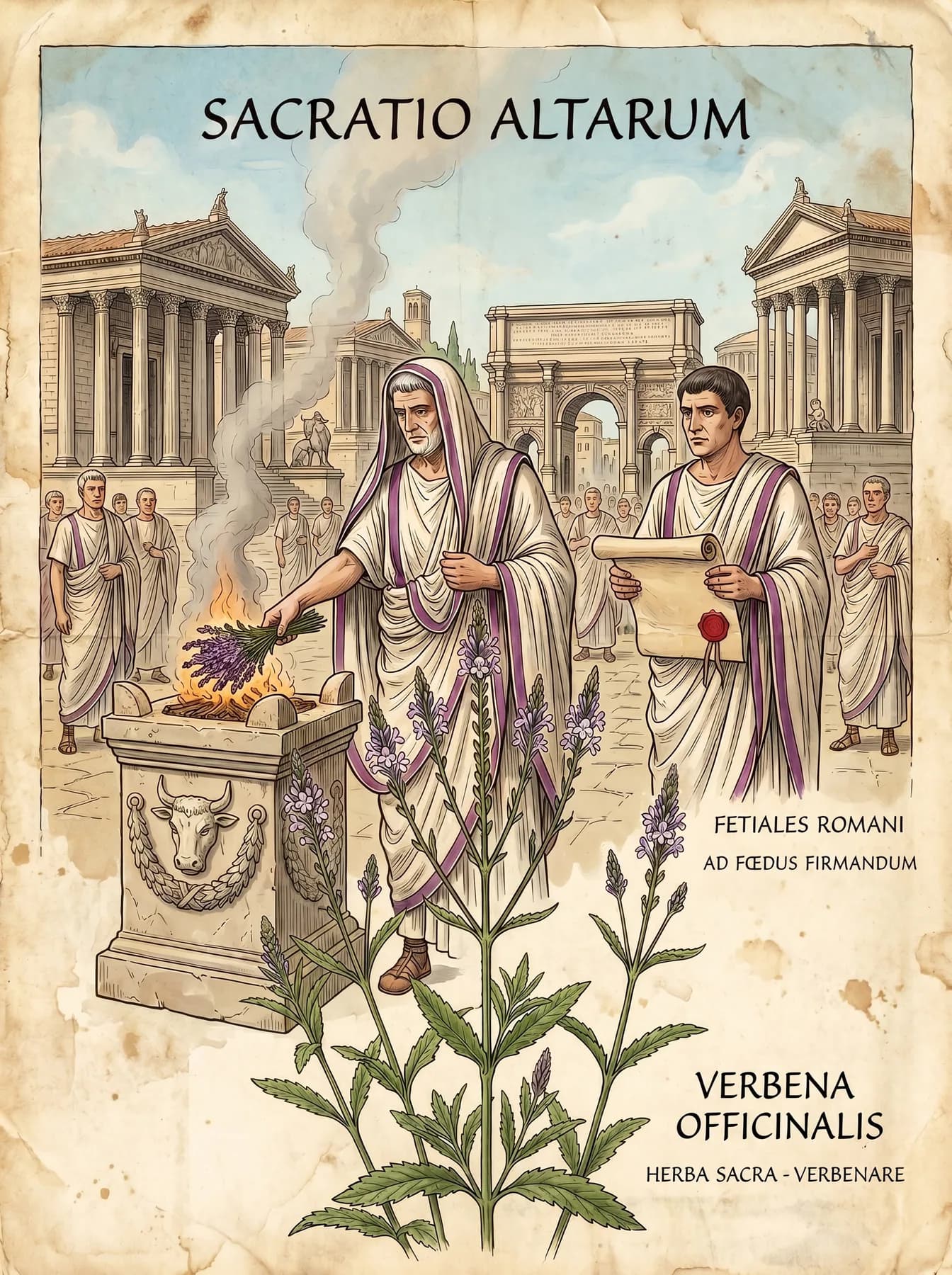
In Rome, vervain went by two names: Herba sacra, the sacred herb, and Veneris herba, the herb of Venus. It was used to consecrate the altars of Jupiter, its name verbenare even gave us the modern word vervain.
But its most fascinating role was diplomatic. The fetiales, Roman priest-diplomats, wore crowns of woven vervain and carried a branch in their hands when negotiating peace treaties. A symbol of the sacred and of good faith toward Jupiter, the plant marked the inviolable nature of the given word. Roman or enemy, whoever touched the vervain touched the divine.
This herb must be gathered naked, at the new moon, without turning the head.
Pliny the Elder — Naturalis Historia, Book XXV
The Druids' Herb
Celtic Culture
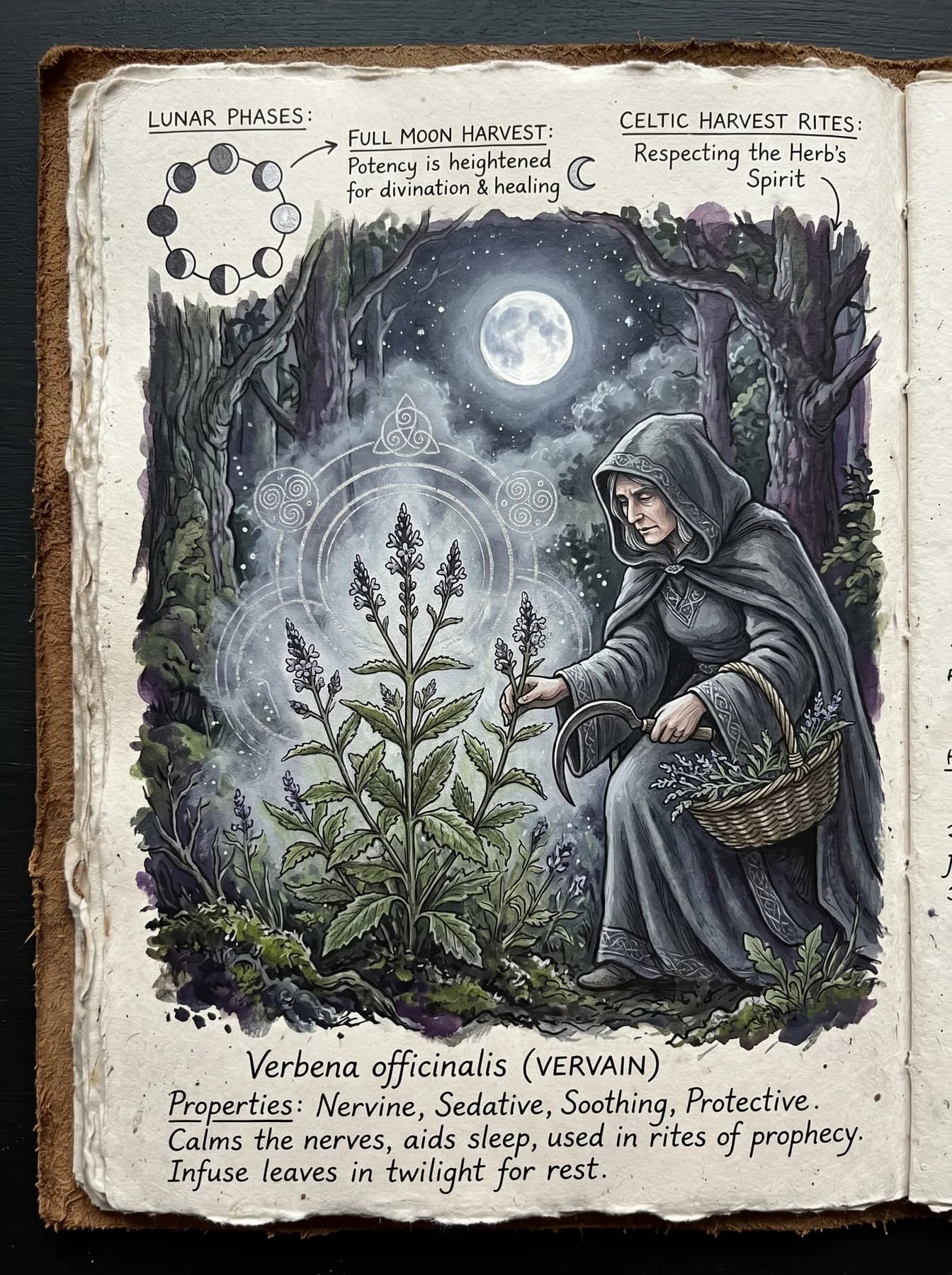
Along with mistletoe, vervain is one of the two most sacred herbs of Celtic spirituality. The druids harvested it at precise moments of the lunar calendar, often at the rising of Sirius, and used it to prepare the lustral water for purification rites.
It featured in divinatory practices and sacred medicine. Soon suspected by the medieval Church of being an ingredient in love potions, it came to be called the witches’ herb. Gathered with the left hand, dried in the shade, it kept, so it was said, its protective power against evil.
Gather the vervain with the left hand, and let only the shadow dry it.
Druidic adage passed down through Gaulish oral tradition
The Herb of the Cross
Christian Tradition
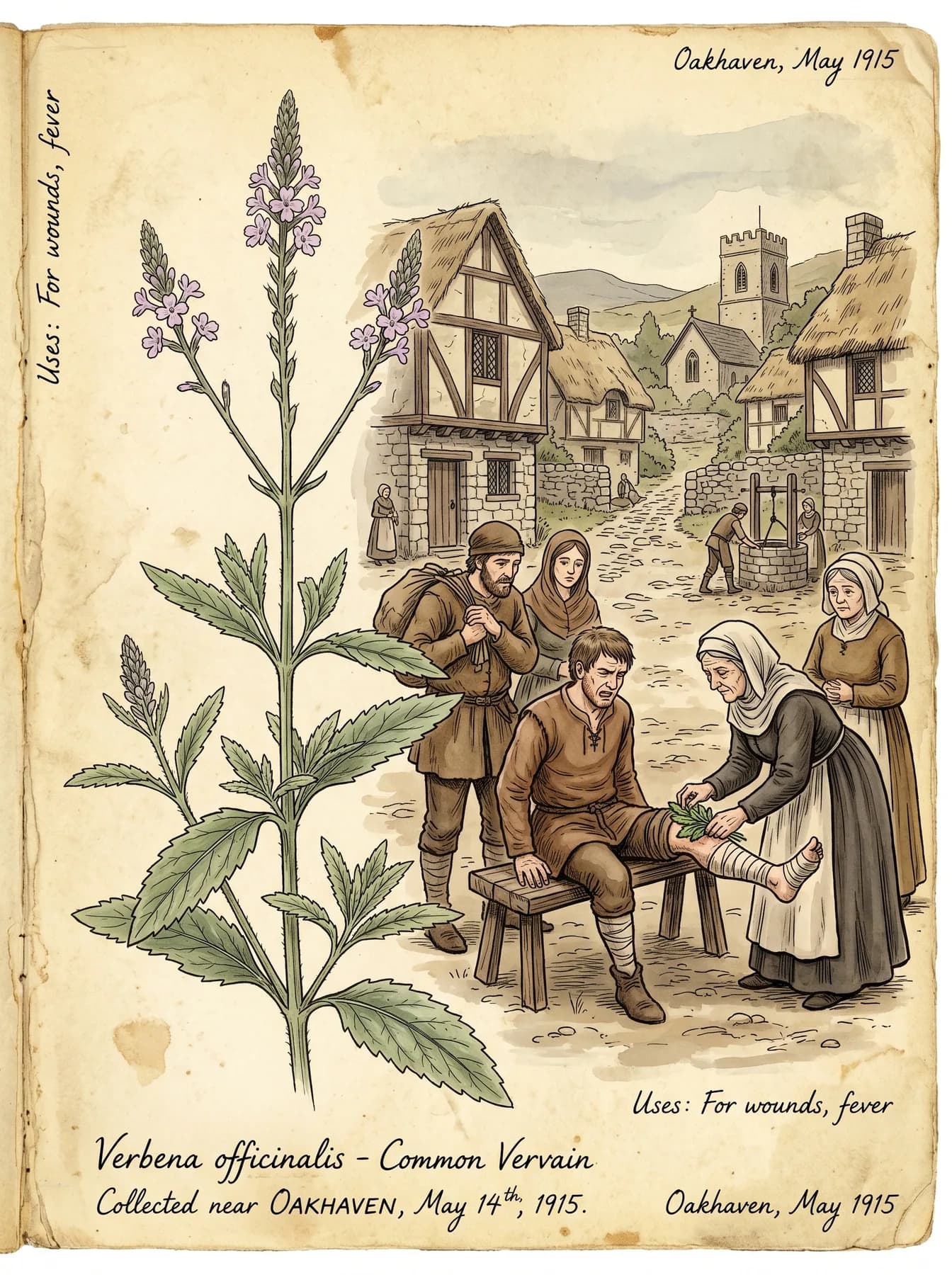
In medieval Europe, vervain was renamed the Herb of the Cross, legend has it that it grew on Mount Calvary, where it staunched the wounds of Christ.
In the 12th century, Hildegard of Bingen recorded it in her Physica against throat inflammations, ulcers, and jaundice. A pagan plant turned Christian plant, it kept its reputation: touched by the sacred, it accompanied the wounded.
The American Cousin
First Nations, from the marshes to the pharmacopoeias
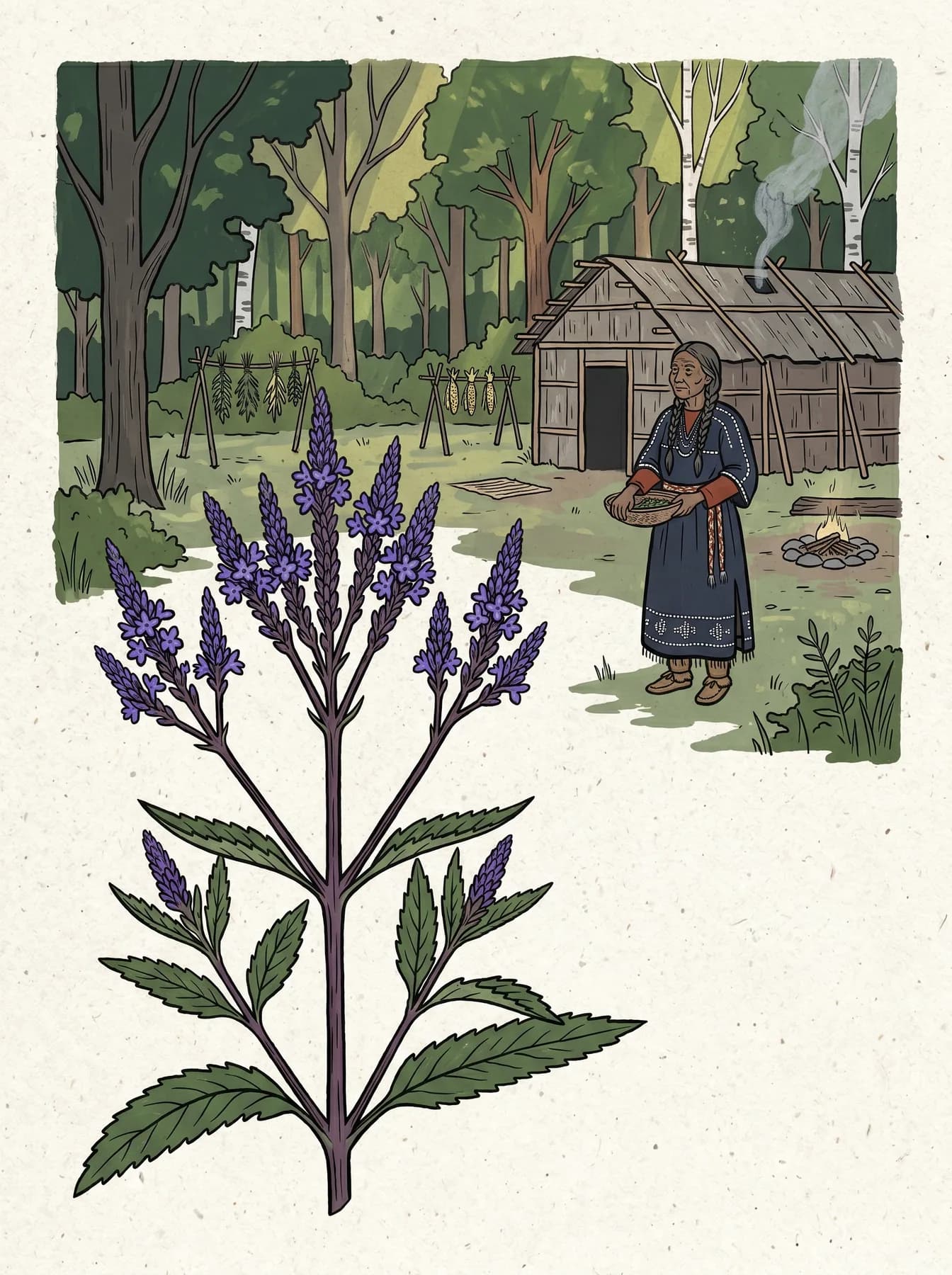
While the common vervain was crossing the Old World from temple to monastery, another vervain was growing in the wet meadows of northeastern America. The peoples who shared those territories, Haudenosaunee, Cherokee, Ojibwa, Meskwaki, Anishinaabe, knew it well.
Their knowledge was passed down orally before being recorded by the ethnographers of the 20th century — Waugh, Densmore, Smith, Herrick. When English-speaking settlers encountered it, they gave it a name that says it all: Simpler’s Joy, the herbalist’s joy.
Simpler’s Joy — the herbalist’s joy.
Name given by English-speaking settlers of North America
The Tears of Isis
Ancient Egypt
For the ancient Egyptians, vervain wasn't just a plant — it was a memory. According to myth, when the goddess Isis wept the death of her husband Osiris, her tears touched the earth — and from each drop sprang a slender stem with pale lilac flowers.
The priests kept dried bouquets in their temples, burning them as offerings or using them in rituals of bodily purification and fertility.
Learn herbalism for free through playful quizzes, 10 minutes a day
- Plant identification
- Medicinal properties
- Plant folklore and history

How to Prepare Common Vervain
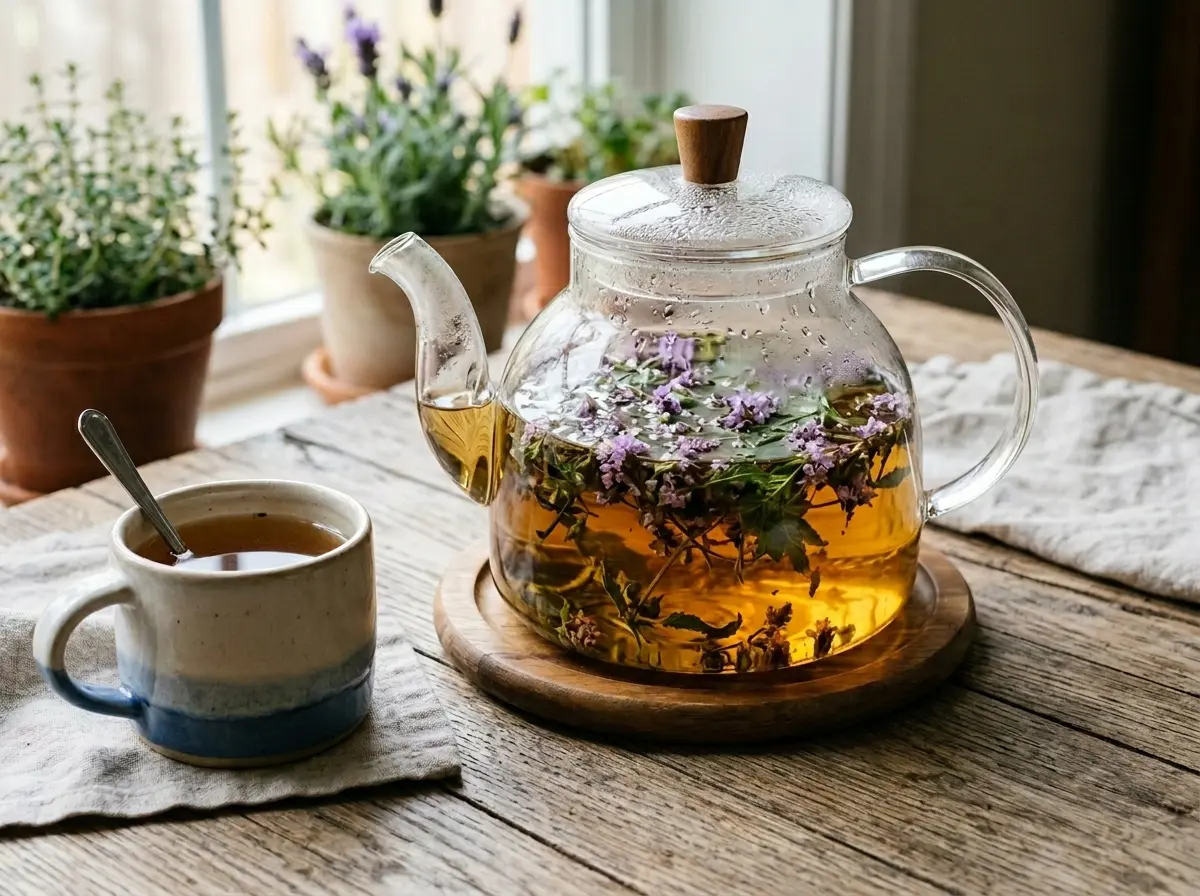
An infusion remains the simplest way to enjoy the benefits of common vervain. Let a handful of freshly harvested flowering tops, or one teaspoon of dried herb, steep for about 10 minutes in water heated to around 85 °C.
The flowering tops notably contain iridoids, including verbenalin, as well as flavonoids, tannins, and various phenolic compounds. Together, these constituents contribute to its nervine, antioxidant, and mildly antispasmodic properties.
Read the hydroponic growing guide
→
FAQ
What are the traditional benefits of vervain?
Vervain is traditionally associated with relaxation, digestive comfort, and periods of nervous tension.
Does vervain help with sleep?
Traditionally used to support rest, vervain is currently being studied for certain compounds associated with sleep.
What does scientific research say about vervain?
Modern research mainly studies its iridoids, flavonoids, and verbascoside for their potential biological activities.
Why was vervain considered a sacred plant?
From ancient Egypt to Celtic traditions, vervain was long associated with purification, protection, and sacred rites.
What are the main active compounds in vervain?
Vervain contains verbenalin, hastatoside, verbascoside, and several flavonoids that make up its natural phytocomplex.