
Some evenings, the eight-minute shower isn't enough anymore. Evenings when you need the water to do something other than wash off the sweat — to slow time down, to change the air around you, to give you back to yourself. Those are the evenings you rediscover something women have known for centuries: a bath can hold plants. And that changes everything.
1. An hour for yourself
You finally locked the door.
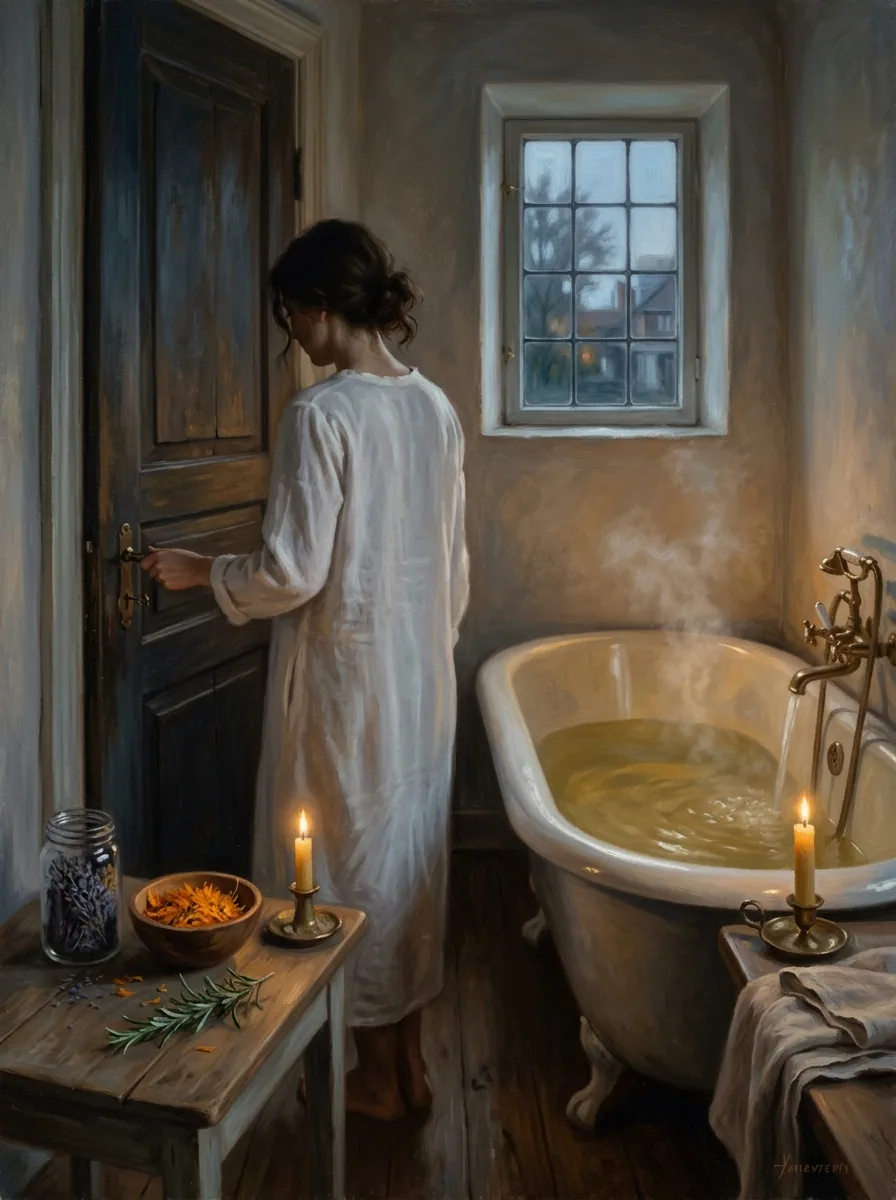
It took you three quarters of an hour of inner negotiation to decide that yes, tonight, you were going to do it. The dishes can wait. The laundry can wait. The work emails can wait. Your youngest, already asleep, won't wake before six in the morning. Your oldest is watching a film with their dad. You left your phone on the kitchen counter, on purpose, so it wouldn't be within reach.
You turn on the tap. The water begins to rise in the tub.
And then you notice something strange. You've forgotten how it's done. How to take a real bath. Not an eight-minute shower in operational mode — a bath, where you stretch out, where you close your eyes, where you let time do its work.
You wonder: what do I put in it?
Because you know that a bath of plain water isn't enough anymore. Not tonight. Tonight, you need your bath to do something to you. You need the air to change. Your skin to change. Your head to change.
You could open a mass-market bubble bath bought at the drugstore. You know what you'd find in it: sodium laureth sulfate, synthetic fragrance, and three years of regret on the skin of your back.
You look at the jar of dried lavender on the shelf. You look at the pot of calendula your sister gave you for your birthday. You look at the sprig of rosemary sitting next to the sink.
And you wonder: these plants — can I put them in my bath?
The answer is yes.
And it's far simpler, far more effective, and far older than you think.
2. Two ways to do it
The clean way — the sachet
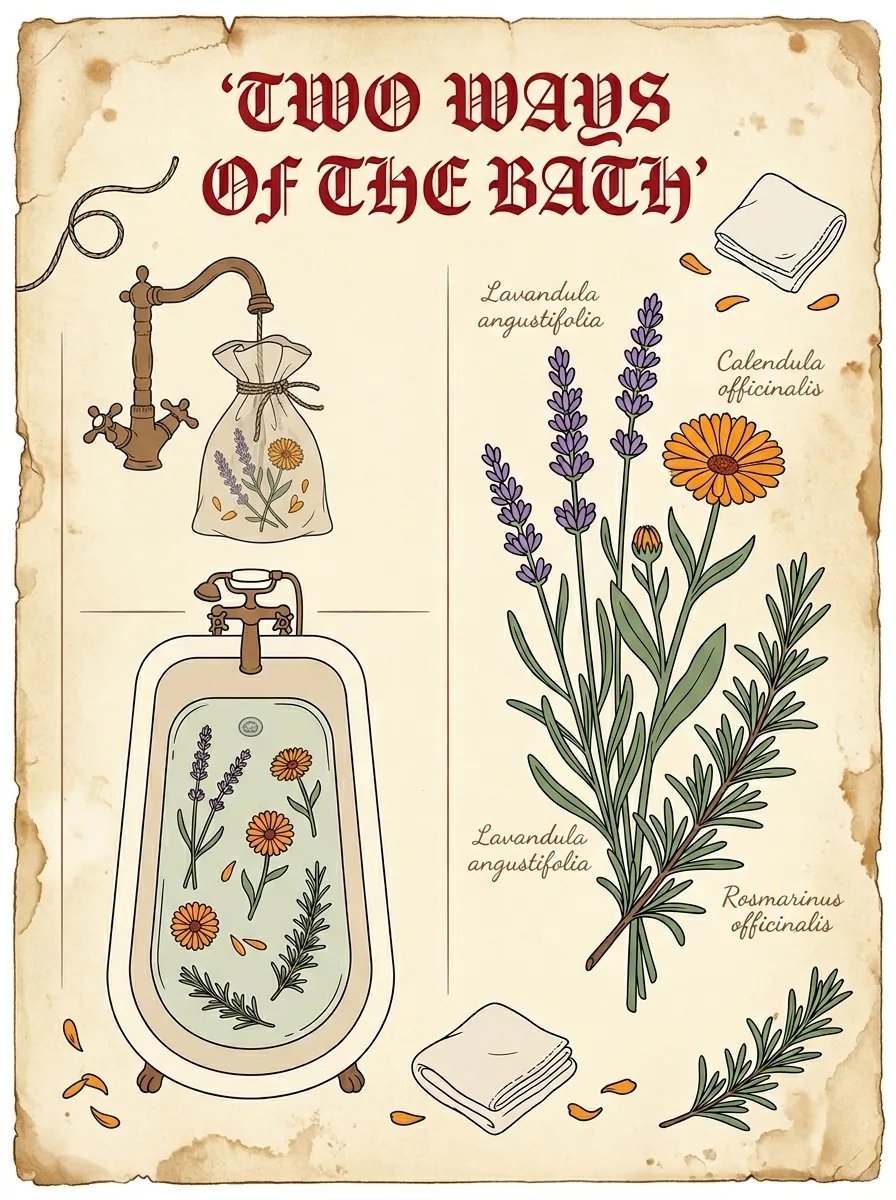
If you have a bit of fabric at home, this is the simplest method. A square of muslin, an old cotton handkerchief, or even a clean nylon stocking — anything works. You put your plants in it, tie it shut, and hang it from the tap while the water runs.
That's it.
🌿 The bath sachet — how to make it
2 large handfuls of dried plants (lavender, calendula, rosemary — alone or blended)
A square of fabric about 20 × 20 cm (8 × 8 in), or a muslin bag bought loose
- A string or an elastic to close it
Hang the sachet over the tap while the water runs, or let it float in the bath like a big tea bag
Allow about 10 minutes of steeping for the water to take on color and scent
You get out of the bath, take out the sachet, toss it in the compost. No cleanup. No flowers in the tub. No argument with your partner about who left petals lying around.
It's the method for evenings when you want the ritual to stay simple, so you'll do it again next week without thinking about it.
Learn herbalism for free through playful quizzes, 10 minutes a day
- Plant identification
- Medicinal properties
- Plant folklore and history

The wild way — floating flowers
But there are evenings when you don't feel like being tidy. When you want it to be beautiful. When you want to step into the water and see flowers floating around you, like a scene you pinned on Pinterest six months ago and never thought you'd actually get to live.
For those evenings, you don't need a sachet.
You toss your plants straight into the water.
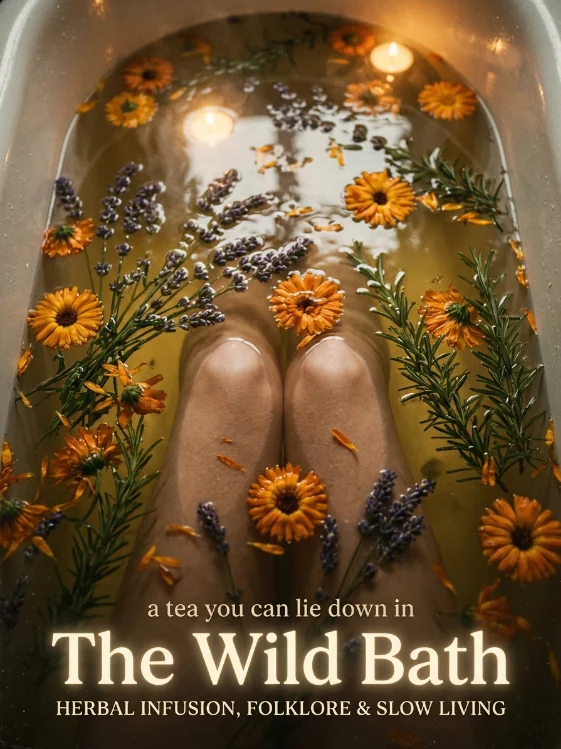
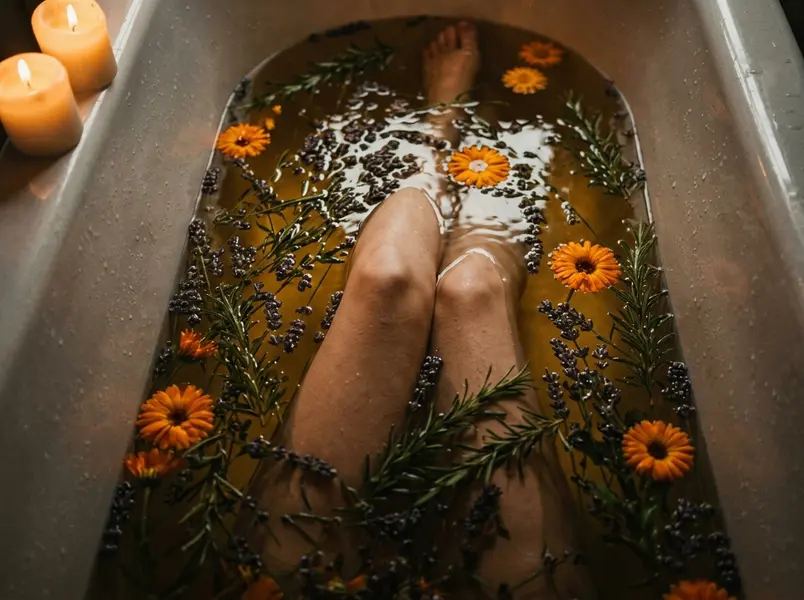
A big handful of lavender. A few whole calendula flowers. A sprig of fresh rosemary if you have one. The water turns golden, the air fills with a scent the walls will remember for two days, and you step into a bath that looks like a painting.
⚠️ The only price to pay: when you drain the tub, there's a little cleanup. A few petals stuck in the drain, sometimes a rosemary leaf clinging to the rim. Five minutes of rinsing, tops.
For many women, those five minutes are the fairest price they've paid all week.
Which method tonight?
Honestly? Both are good. You choose according to your mood that evening.
- The sachet if you want it to stay a quiet gesture, woven into your routine, repeated every Sunday without ceremony
- The floating flowers if you want to mark the moment, if it's that kind of evening, if you feel your body needs something that resembles a silent celebration
3. Trotula and the women of Salerno
This gesture you're making tonight — locking the door, running the water, taking an hour for yourself — a woman put into words nearly a thousand years ago.
A physician in a world that forbade women medicine
In the 11th century, on the southern coast of Italy, there is a city like no other. Salerno. It sits between the Tyrrhenian Sea and the hills, at the crossroads of the Latin, Greek, Arab and Jewish worlds. Sailors, merchants and scholars land there from every port of the Mediterranean.
And in Salerno, there's something unique in Europe: a school of medicine that admits women. Not as patients — as students, as teachers, as physicians.
One of them is named Trotula.
We know little precise about her life, but we know what she did. She taught medicine. She healed. And above all — she wrote. Three treatises that would circulate throughout Europe for five hundred years, copied and recopied by monks, translated from Latin into French, English, German.
What she dared to write
The most famous of her books bears a title that didn't exist before her: De ornatu mulierum. On the Adornment of Women.
For the first time in Europe, a woman writes that women deserve to have their bodies cared for. Not to please a husband. Not to bear a child. For themselves.
The book is full of recipes. Skin care. Face masks. Hair oils. And baths. Many baths.
Trotula's baths
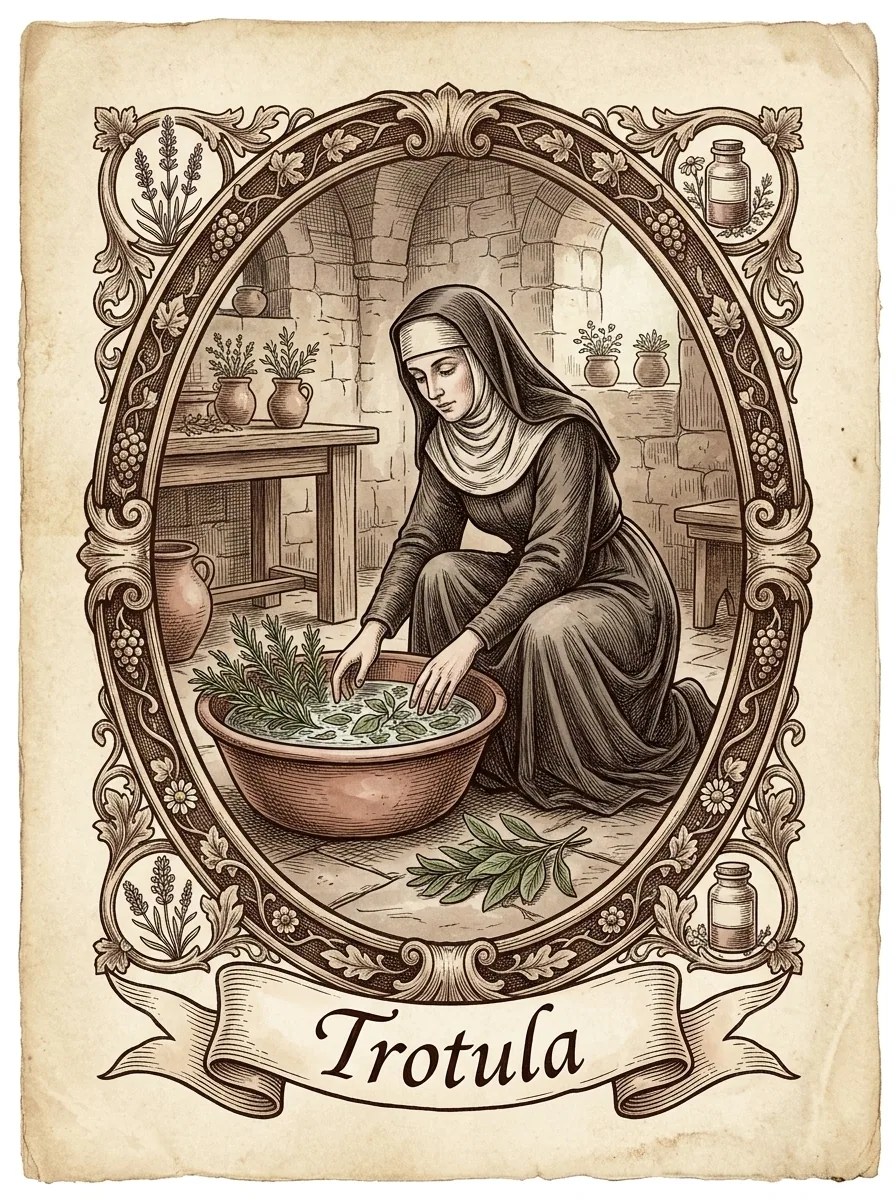
Trotula prescribes herbal baths for all women, not only the sick. Rose baths for the skin of the face. Lavender baths for restless nights. Mallow-flower baths to soften the skin of the back. Walnut-leaf baths to warm the body in winter. Chamomile baths for new mothers.
She describes how to boil the plants, how to measure the water, how long to stay in the bath, how to dry off afterward. With the precision of a physician and the patience of a woman who knows she's speaking to other women.
At a time when the Church held that women's bodies were to be redeemed, Trotula wrote that they were to be cared for. It's a political act. It's also an act of love.
What she really gave us
Trotula didn't invent herbal baths. Women had always practiced them, with no manual, no school. She did something quieter and more powerful: she wrote them down. She brought them out of the kitchen and the garden and set them into the books of medicine.
For five hundred years, all across Europe, women could open a medical book and find in it recipes to care for themselves. Not to please. Not to cure an illness. Just to stay connected with their own bodies.