
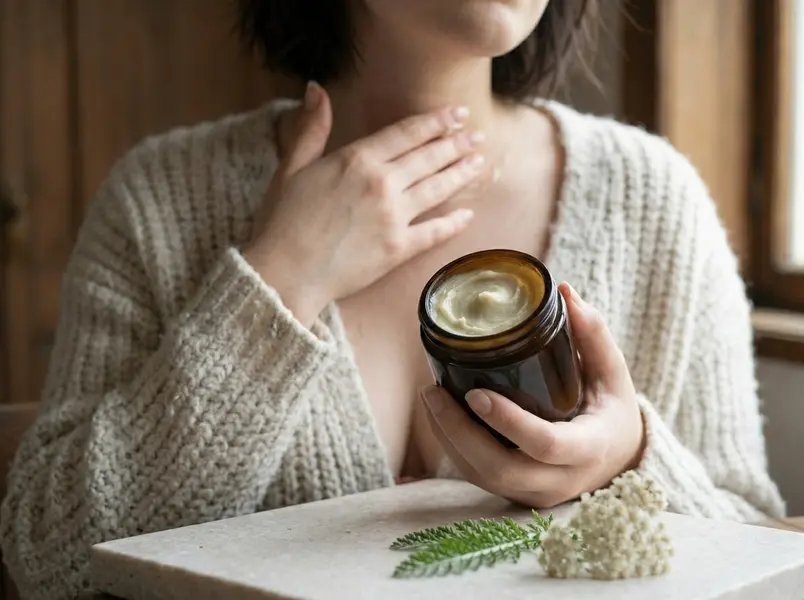
Two simple recipes. Two textures. One plant.
Yarrow is one of the most complete medicinal plants for the skin. Anti-inflammatory, wound-supporting, and antimicrobial, its finely cut leaves contain compounds that calm irritation, support small cuts, and soothe sensitive or reactive skin. It grows in meadows and along paths, and with a few simple ingredients it becomes a remarkable topical preparation.
Two formats are possible: a rich protective salve, or a lighter cream that absorbs more easily. The difference between the two comes down to one ingredient: water.
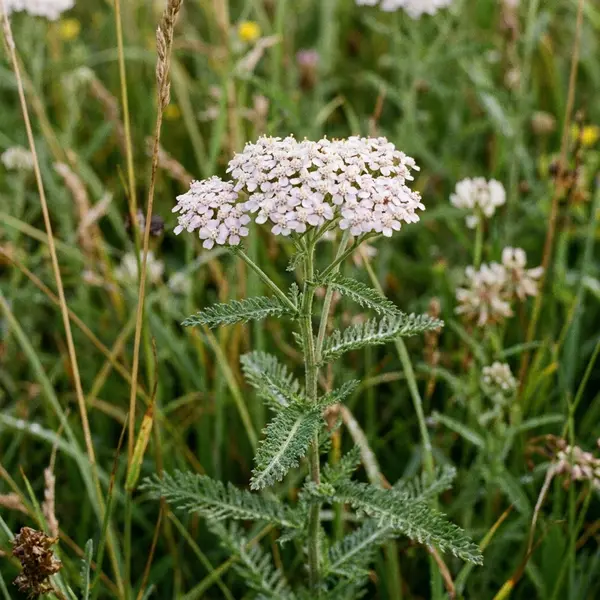
Recipe 1 — Yarrow Salve
Rich, protective, long-lasting.A salve is one of the oldest topical preparations: oil and wax, nothing more. Without water, it forms a barrier on the skin that protects, nourishes, and lets the plant's active compounds work slowly. It is useful for dry skin, lips, elbows, and hands damaged by cold weather.
Yarrow was used in this form in Greek antiquity. The plant takes its Latin name, Achillea millefolium, from the hero Achilles, who was said to apply it with beeswax to wounds.
Ingredients
For about 100 g:
- 80 g yarrow-infused oil, see preparation below
- 20 g beeswax
Texture depends on the wax ratio: 20% gives a soft balm, while 25 to 30% gives a firmer balm.
Prepare the infused oil
- Fill a jar two-thirds full with dried yarrow flowers and leaves.
- Cover completely with olive oil or sunflower oil.
- Let macerate for 4 to 6 weeks away from light, shaking regularly.
- Strain through cheesecloth, pressing well.
Prepare the salve
- Melt the beeswax gently in a double boiler.
- Add the strained infused oil and mix.
- Pour into small glass jars before the mixture solidifies.
- Let cool at room temperature.
Keeps for 12 months away from heat and light.
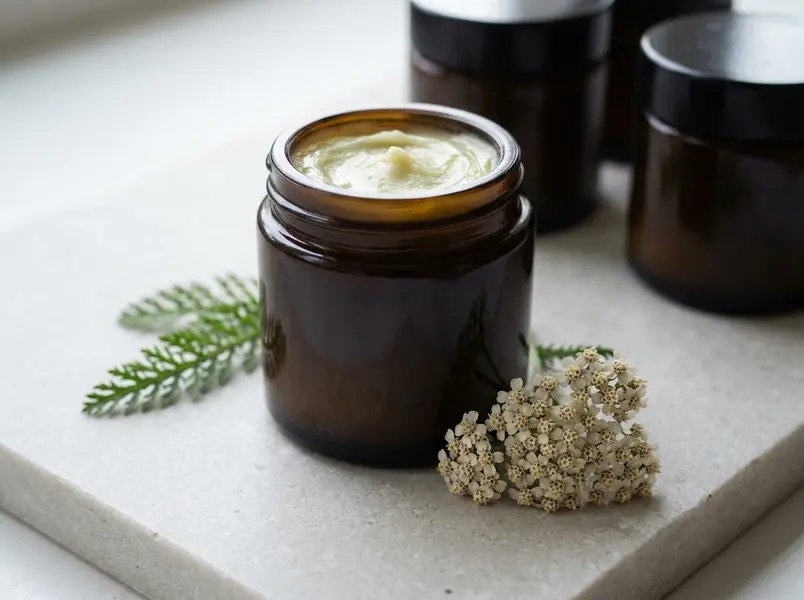
Recipe 2 — Yarrow Cream
Lighter, more absorbent, with two extractions from the same plant.A cream is simply a salve to which water has been added. The beeswax already present naturally helps bind the two: no additional ingredient is needed. The final texture is lighter and more pleasant for normal or combination skin.
What this version adds is this: by replacing water with a concentrated yarrow infusion, you extract the plant's water-soluble compounds in addition to the oil-soluble compounds already present in the oil. The plant is used more completely.
This is the same principle observed by Galen, the Roman physician of the second century, when he added rose water to a mixture of oil and beeswax, giving rise to what we still call cream today.
Ingredients
For about 100 g:
- 60 g olive oil or yarrow-infused oil
- 20 g beeswax
- 20 g concentrated yarrow infusion: 1 tbsp dried plant for 100 ml water, infused 15 minutes, strained
Preparation
- Melt the beeswax in a double boiler.
- Add the oil and mix.
- Remove from heat and let cool slightly: the mixture should remain liquid.
- Pour in the infusion very slowly in a thin stream, stirring constantly.
- Keep stirring until completely cool.
- Pour into clean glass jars.
Keeps for 4 to 6 weeks in the refrigerator.
This article is cultural and historical in nature. Yarrow is not a medicine. For any health concern, consult a qualified health professional.