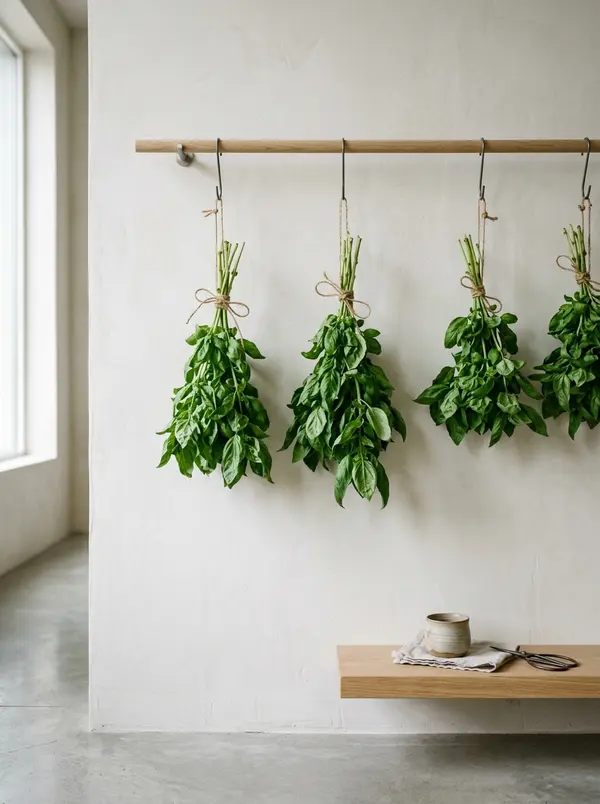
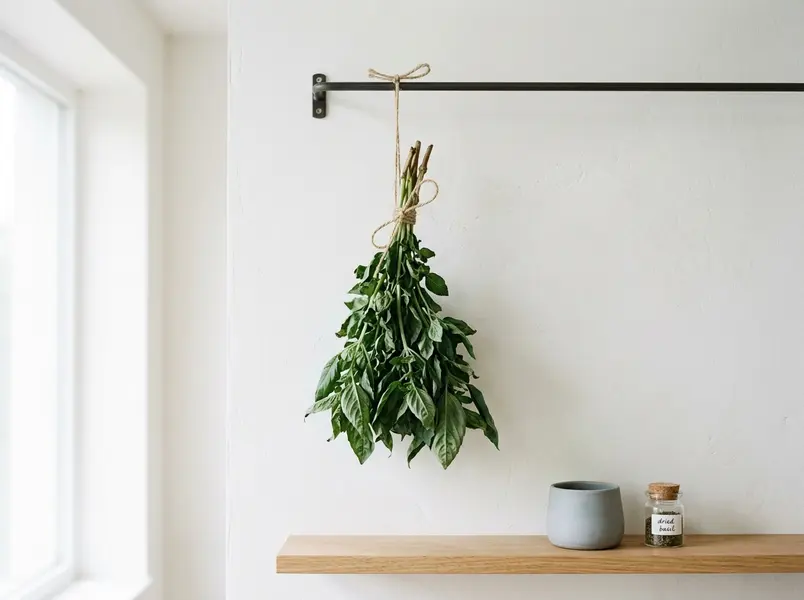
Ocimum basilicum
Genovese Basil
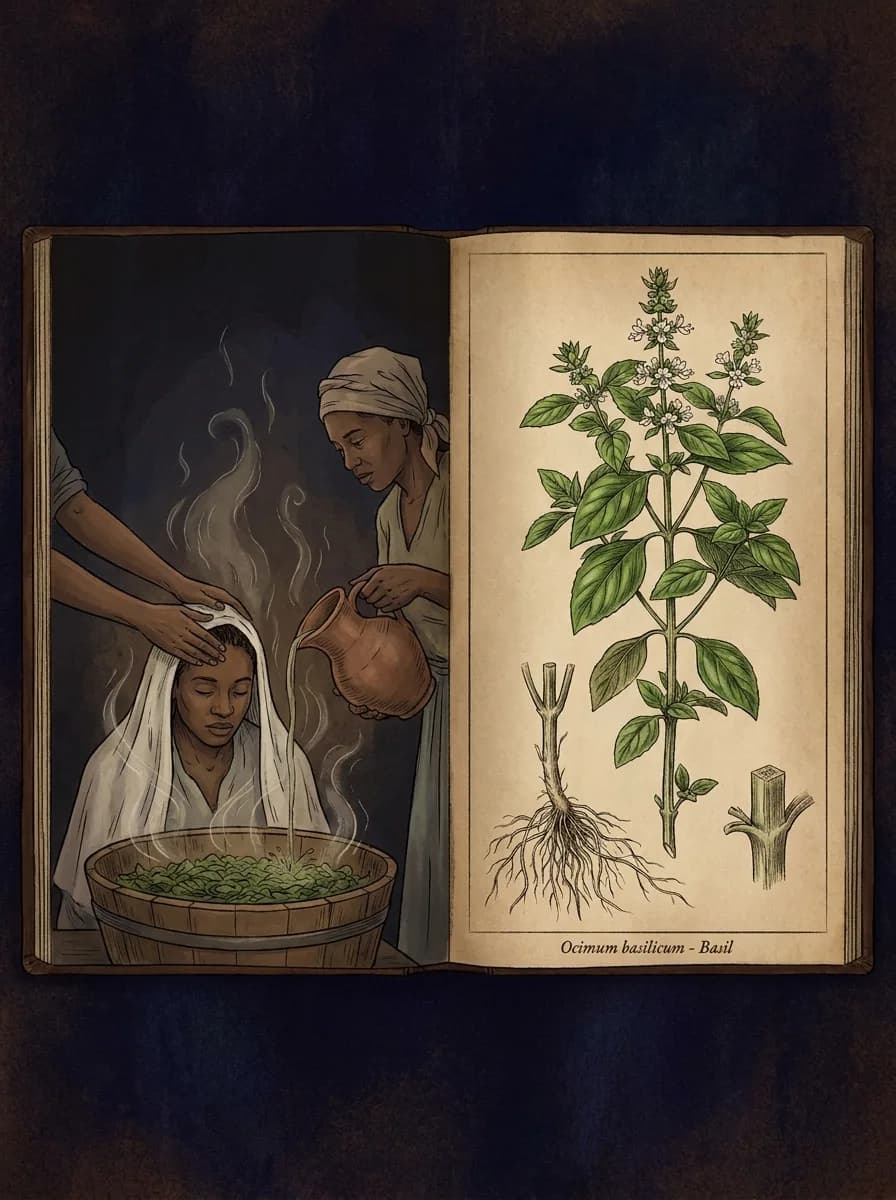
The herb everyone thinks they know. The one in Ligurian pesto, on summer tomatoes, on Italian balconies. Yet behind that familiar culinary face stands the heir of a worshipped planetary lineage — the plant the Greeks called basilikón, « fit for a king ».

The genus Ocimum counts more than seventy species spread across the world. Some of these plants were emblems. Here is how four civilisations lived with them.
History & Mythology
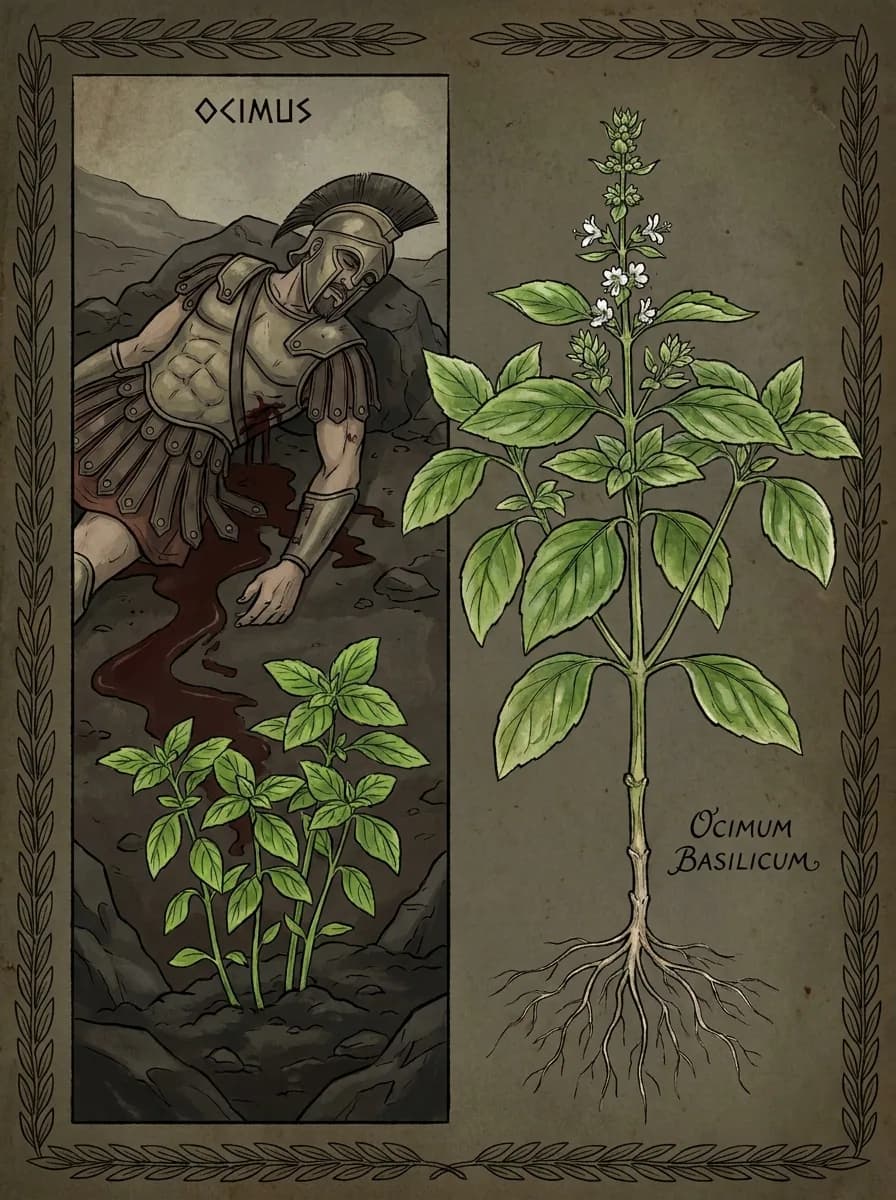
Basilikón, the Herb of Kings
Ancient Greece and Rome
The word comes from the Greek basilikón— « royal », « fit for a king » — derived from basileús, the king. According to Greek mythology, basil was born where Ocimus fell, a warrior killed in battle: where his blood touched the earth, the plant sprang up. Whether one believes it or not, the name remained.
Theophrastus mentions it in his Enquiry into Plants around 300 BCE, and Dioscorides names it ókimon in his Materia Medica in the 1st century. The plant traveled from India along the spice routes and established itself permanently in the Mediterranean.
« Its seeds develop all the better for being sown with curses. »Pliny the Elder — Naturalis Historia, Book XX
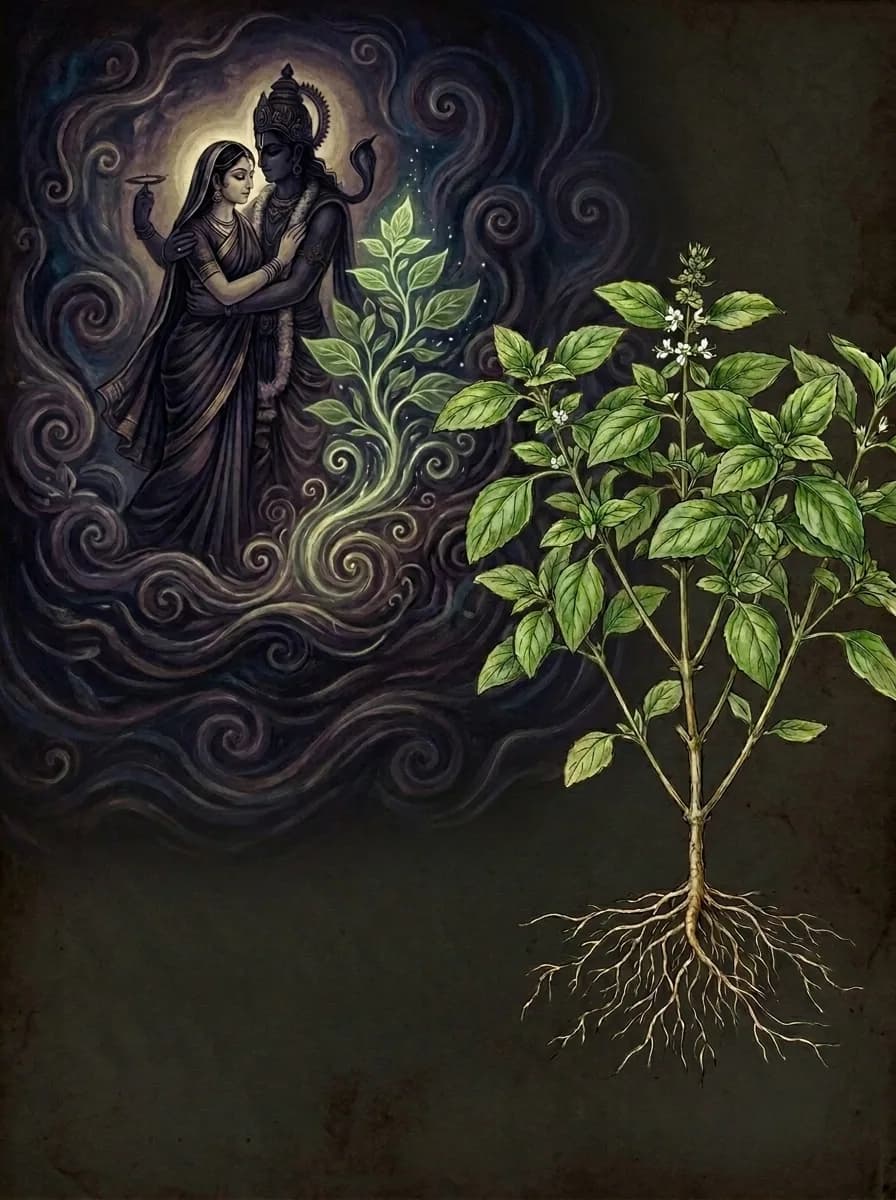
Why Basil
The Thinking Belly
Today's pharmacology rediscovers what herbalists had long sensed: basil's volatile molecules — linalool, eugenol, methyl chavicol — act gently on the smooth muscles of the digestive tract. Preclinical studies describe an antispasmodic action of the aqueous leaf extract, largely attributed to eugenol.
Silent Inflammation and the Skin
Basil belongs to the long tradition of vulnerary plants applied to stings and skin inflammations. Pliny already recommended the crushed leaf against scorpion stings; Ayurvedic and Siddha medicine used it on acne, migraines, and skin irritations. Modern pharmacology has rediscovered in it rosmarinic acid, a polyphenol characteristic of the Lamiaceae, and eugenol — two molecules whose pathways of action overlap with those of classical anti-inflammatories.
What's Inside the Leaf
Before modern chemistry, people spoke of powers and virtues. Today, we speak of molecules. Both refer to the same reality.
Basil doesn't have one active principle — it has an orchestra. Three families of compounds carry the bulk of its action. The oxygenated terpenes — linalool first in the Genovese chemotype, alongside 1,8-cineole — give basil its fresh fragrance and its aromatic calming effect. The phenylpropanoids — methyl chavicol (estragole), eugenol, methyl eugenol — carry the antispasmodic and antimicrobial action traditionally described. The polyphenols — rosmarinic acid foremost, caffeic acid, luteolin, quercetin — provide the antioxidant and anti-inflammatory effect. Together, they form what herbalists have always called the phytocomplex — the idea that the whole plant does more than the sum of its isolated molecules.
🌿 Linalool · Methyl chavicol · Eugenol · 1,8-Cineole · Rosmarinic acid · Luteolin
Ocimum basilicum
Indo-Malesia · naturalised in the Mediterranean
Summer · before flowering
Action Profile
Active Compounds
Oxygenated terpenes (linalool, 1,8-cineole)
~ 40 %Phenylpropanoids (methyl chavicol, eugenol)
~ 30 %Polyphenols (rosmarinic acid, flavonoids)
~ 20 %Others (sesquiterpenes, traces)
~ 10 %⚠ Contraindications
Pregnancy · Breastfeeding · Prolonged internal use of the essential oil not advised (estragole content). Edible plant with no restriction at culinary doses.

The Hydro garden III
Hydroponic garden with grow light and root oxygenation pump , 2.5L tank, seeds and nutrient
Selected References
Pliny the Elder. Natural History, Book XX.
Dioscorides. De Materia Medica, Book II (1st century).
Boccaccio. Decameron, Day IV, Tale V (c. 1353).
Parkinson, John. Theatrum Botanicum (1640).
Culpeper, Nicholas. The English Physitian (1652).
Grieve, Maud. A Modern Herbal (1931, reissued 1971).
Wood, Matthew (2008).
The Earthwise Herbal — A Complete Guide to Old World Medicinal Plants
. North Atlantic Books.
Cohen, M. M. (2014). « Tulsi — Ocimum sanctum: A Herb for All Reasons. » Journal of Ayurveda and Integrative Medicine, 5(4), 251–259.
Azizah, N. S., et al. (2023). « Sweet Basil ( Ocimum basilicum L.) — A Review of Its Botany, Phytochemistry, Pharmacological Activities, and Biotechnological Development. » Plants, 12(24), 4148.
Filip, S. (2017). « Ocimum basilicum L. — A Review on its Chemical Constituents and Pharmacological Activities. » Differential Nutrition-Health Properties of Ocimum basilicum, PMC9222536.
Padma Purana; Devi Bhagavata Purana (classical Vedic texts).
Greek Orthodox Archdiocese of America — Exaltation of the Holy Cross (liturgical tradition).
ReVista, Harvard DRCLAS — « The Coolness of Cleansing: Ritual Baths in Haitian Vodou. »